Aquatic Habitats
Water Ecosystems
Japan's extraordinarily diverse hydrological landscape — from glacier-fed alpine streams to tidal wetlands — underpins much of its ecological richness. Streams, rivers, ponds, and wetlands thread through public parks both urban and remote, creating corridors for wildlife and sites of immense natural beauty.
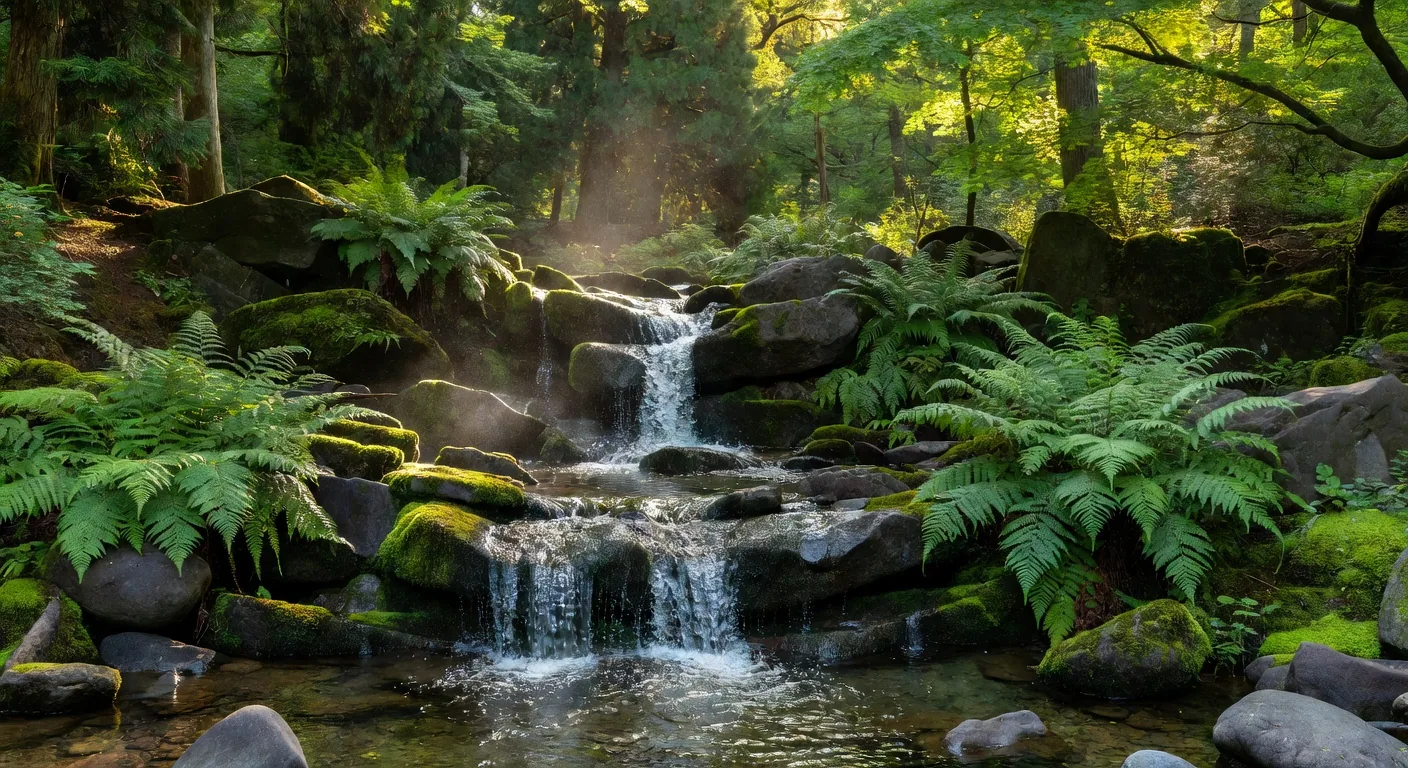
Fast-flowing mountain streams in parks such as Nikko and Chichibu-Tama-Kai support populations of Japanese giant salamander (Ōsanshōuo) — the world's second-largest amphibian, reaching up to 1.5 metres in length. These ancient creatures, largely unchanged for 30 million years, require cold, clear, well-oxygenated water, making their presence a powerful indicator of pristine habitat.
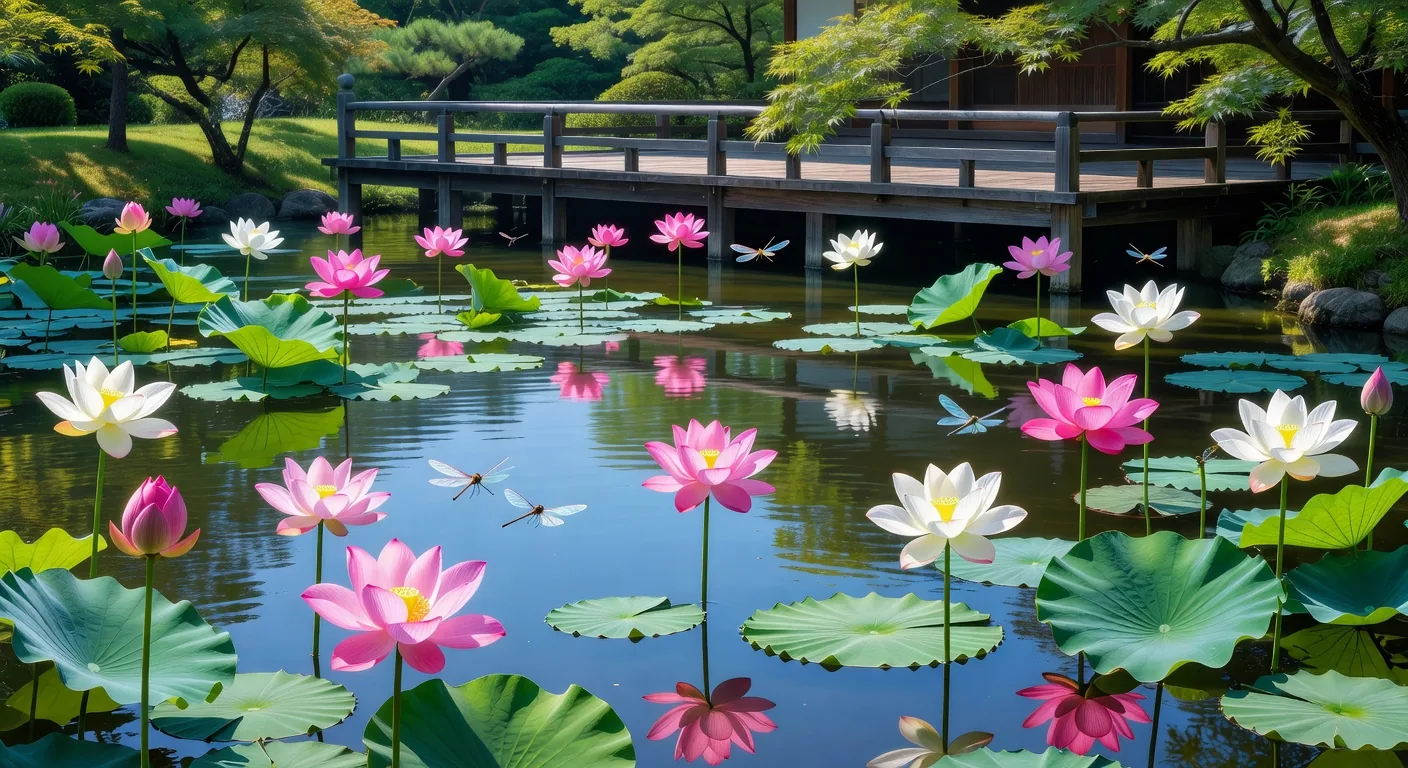
Coastal wetlands, rice paddy margins, and the restored river corridors of Japan's urban parks similarly teem with frogs, dragonflies, terrapins, and dozens of aquatic invertebrate species that form the base of the food web supporting birds and mammals.
- Alpine streams and waterfalls: Nikko, Akame Shijuhachi-taki (Mie)
- Wetland parks: Kushiro Shitsugen, Yatsu-Higata, Watarase Yusuichi
- Sacred ponds: Shinobazu Pond, Ōsaka's Sumiyoshi Grand Shrine ponds
- Coastal habitats: Mangroves in Okinawa and Amami-Oshima
- River park corridors: Tamagawa, Arakawa, Kamo River (Kyoto)
- Volcanic lake ecosystems: Lake Mashu, Lake Toya (Hokkaido)