Tokyo's popular image is one of vertical neon and relentless density, yet the city harbours over 82,000 parks and green spaces — from intimate neighbourhood pocket parks to sprawling national gardens. With a total green coverage of roughly 7,600 hectares across the metropolitan area, Tokyo offers a park experience as varied as the city itself.
The parks range from the formal geometries of national and imperial gardens to the wild reed beds and tidal flats of bayside reserves. The city's relationship with its green spaces is deeply cultural: the annual hanami (cherry blossom viewing) season transforms parks into communal living rooms, while late-autumn foliage draws visitors to seek out the most intensely coloured zelkova and ginkgo groves.
Load an IC card (Suica or Pasmo) for seamless access to all rail, metro, and bus services. A single day pass on the Tokyo Metro covers unlimited rides on all nine metro lines for ¥600 — ideal for park-hopping across the city.
Yoyogi Park occupies 54 hectares in the heart of Shibuya, adjacent to the Meiji Shrine forest. It is the quintessential Tokyo public park — democratic, lively, and endlessly varied in its use.
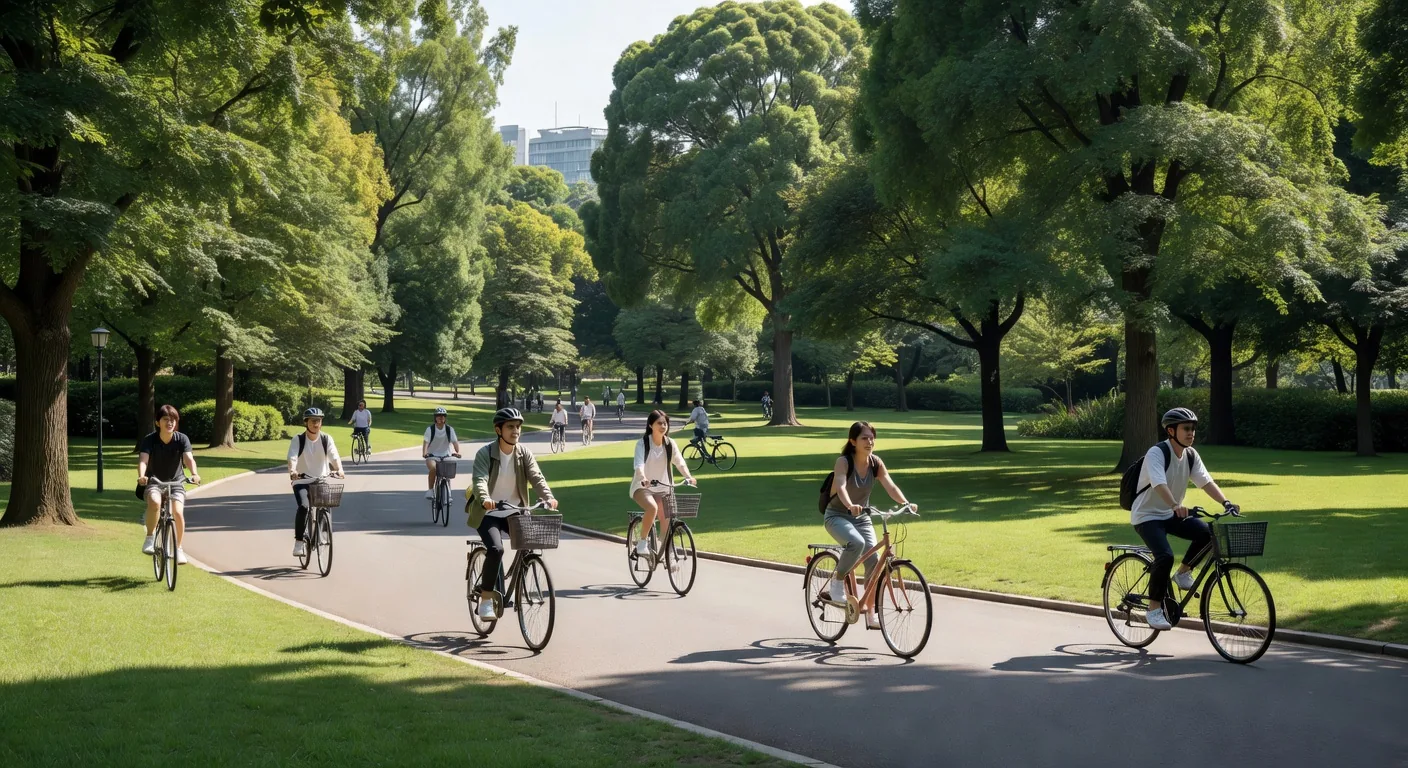
Weekends here are a joyful spectacle: cyclists cruise the wide central path, musicians rehearse in quiet corners, families spread picnic blankets beneath the zelkova trees, and groups practice taiko drumming, salsa, and hula hoop in the open plazas. On warm Sunday afternoons, Yoyogi produces one of the most vivid urban social scenes in Asia.
The park's cycling circuit is a particular highlight — a 1.5 km dedicated cycling path (bicycles available to rent at the park entrance for approximately ¥200/hour) allows visitors to explore the grounds at a leisurely pace. The inner forest area, connected to the Meiji Shrine forest, offers genuine woodland quiet just minutes from Harajuku Station.
These eight parks represent the finest and most varied green spaces that Tokyo has to offer, from Edo-period daimyo gardens to broad metropolitan parks.
Japan's finest national garden, spanning 58 hectares across Shinjuku and Shibuya. Originally an imperial garden opened to the public in 1949, it harmoniously blends three distinct styles: formal French symmetry, English landscape garden, and traditional Japanese stroll garden.
The Japanese garden — centred on a large central pond with stone lanterns and a traditional rest house — is among the most composed in Tokyo. In spring, 1,500 cherry trees of 65 varieties bloom in staggered succession, extending the season for nearly four weeks. In autumn, the French garden's plane trees turn a vivid gold.
Tokyo's oldest public park and its cultural heart, established in 1873 on the Meiji government's first act of park creation. Ueno's 53 hectares hold an extraordinary density of cultural institutions: the Tokyo National Museum, National Museum of Nature and Science, National Museum of Western Art (a Le Corbusier UNESCO site), Tokyo Zoo, and the Tokyo Bunka Kaikan concert hall.
At the park's southern end, Shinobazu Pond — a rare remnant of the wetland that once covered much of eastern Tokyo — hosts lotus flowers in summer and wintering ducks in the colder months. Ueno is the city's trusted hanami venue, its central avenue lined with 800 Somei-yoshino cherry trees.
Opened in 1903 as Japan's first Western-style public park, Hibiya occupies 16 hectares at the very centre of the capital — steps from the Imperial Palace moat and adjacent to Ginza. Its formal rose gardens bloom spectacularly in May and October, while the large open-air music shell hosts free concerts throughout the year.
Hibiya offers a composed retreat from the urban intensity of Marunouchi. The pine-shaded promenades, ornamental ponds, and public tennis courts give it a civic character that feels genuinely European — a deliberate design intention from the Meiji era.
One of Tokyo's oldest and most celebrated gardens, constructed beginning in 1629 as the estate garden of the Mito branch of the Tokugawa shogunate. The stroll garden takes its name from a Confucian phrase meaning "worry before the people, rejoice after the people" — a philosophy of civic virtue embodied in the garden's open character.
The design draws inspiration from famous Chinese and Japanese scenic landscapes: Lushan in China, the West Lake at Hangzhou, and Lake Biwa in Shiga. A sinuous path leads visitors past a central pond, over stone bridges, through rice paddies — still cultivated by local schoolchildren — and across meadows of bush clover and iris.
A tidal garden at the confluence of the Sumida River and Tokyo Bay, Hamarikyu is unique among Tokyo's gardens for its seawater ponds that rise and fall with the tides. Originally a shogunal hunting ground and duck-trapping area, the 25-hectare site was opened to the public in 1945.
The garden's historic teahouse — Nakajima no Ochaya — sits on a small island at the centre of the main tidal pond, reached by a wooden bridge. Matcha and seasonal Japanese sweets are served here daily from 9 am to 4:30 pm. Visitors arriving by water bus from Asakusa (a scenic 40-minute journey) land directly at the garden's waterfront entrance.
Widely considered Tokyo's most beautiful stroll garden, Rikugien was designed in 1702 by Yanagisawa Yoshiyasu, a senior councillor to the fifth Tokugawa shogun. The garden's name — "the six principles of poetry" — reflects its design concept: 88 miniature landscapes drawn from scenes described in classical waka poetry are encoded into the grounds, each marked by a subtle stone marker.
A central pond of irregular, organic shape defines the composition, with gentle hillocks, stone bridges, and a reconstructed Edo-period teahouse providing focal points. Rikugien's autumnal display — centred on a magnificent weeping cherry tree — is perhaps the most photographed in all of Tokyo.
Straddling the boundary of Musashino and Mitaka cities, Inokashira is one of Tokyo's most beloved neighbourhood parks. Its centrepiece, Inokashira Pond, was the historic source of water for Edo, with spring-fed waters providing the city's supply until the Meiji period.
Today the pond is the setting for a charming row-boat rental operation (¥700 per 30 minutes for standard boats, ¥800 for the distinctive swan boats). The park's woodland paths, art market, small zoo, and proximity to Ghibli Museum make it an ideal half-day destination. Inokashira has a particularly devoted local following — visitors will find it immaculately maintained and free from commercial intrusion.
The Yamanote Line — Tokyo's iconic circular rail loop — is the single most useful tool for park-hopping across the city. All eight parks featured above are within easy walking distance of a Yamanote Line or connecting station.
| Station | Park / Garden | Walk Time | Line |
|---|---|---|---|
| Ueno | Ueno Park | 2 min | JR Yamanote / Keihin-Tohoku |
| Harajuku | Yoyogi Park, Meiji Shrine | 3 min | JR Yamanote |
| Shinjuku | Shinjuku Gyoen | 10 min | JR Multiple lines |
| Hibiya | Hibiya Park, Imperial Palace East Garden | 1 min | Metro Hibiya / Chiyoda |
| Shiodome | Hamarikyu Gardens | 7 min | Metro Oedo Line |
| Iidabashi | Koishikawa Korakuen | 8 min | JR / Metro Namboku |
| Komagome | Rikugien | 7 min | JR Yamanote / Metro |
| Kichijoji | Inokashira Park | 5 min | JR Chuo Line |
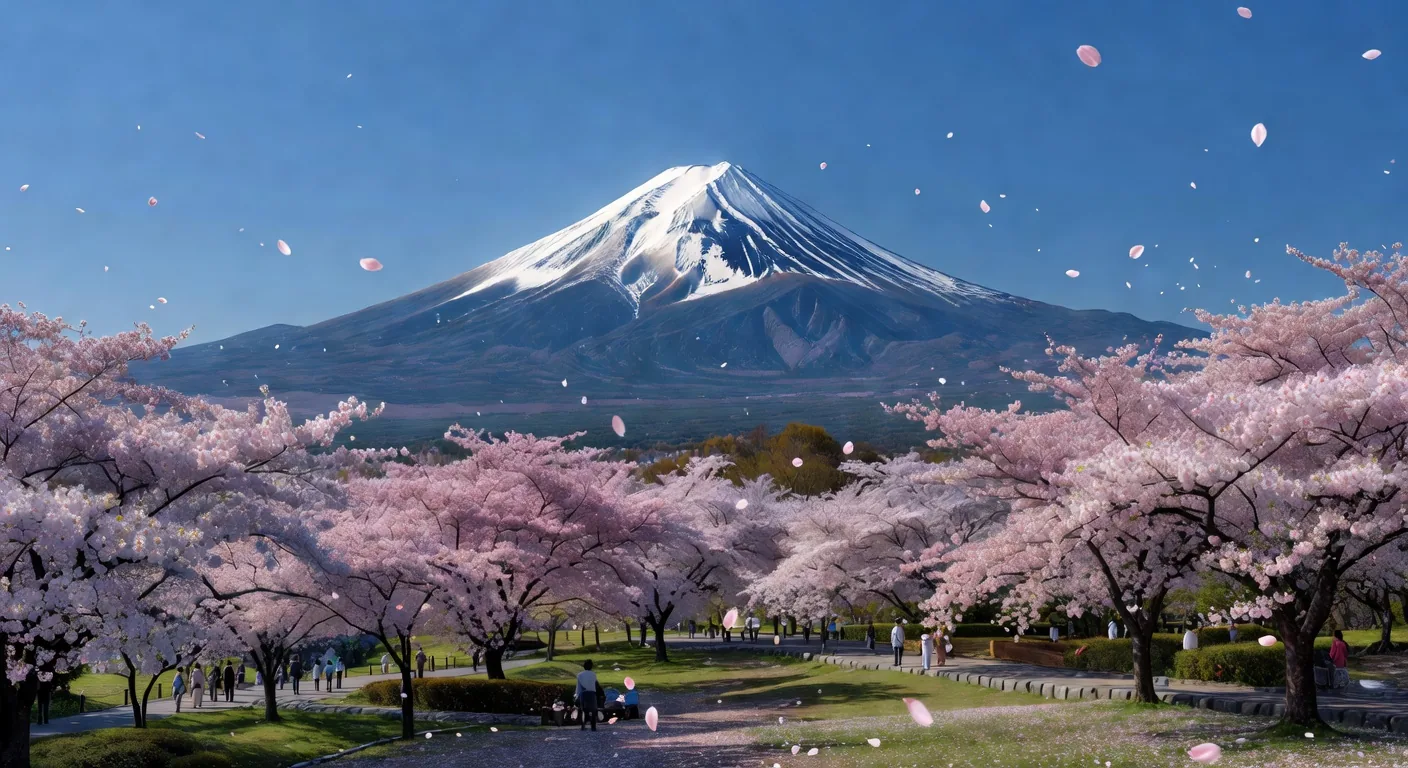
Two hours west of Tokyo by express train or highway bus, the Fuji Five Lakes region offers Japan's most iconic park landscape: Mt. Fuji (3,776 m) reflected in the volcanic lakes at its northern base. The area falls within the Fuji-Hakone-Izu National Park, Japan's most visited national park.
Fuji-Q Highland Park at Kawaguchiko offers the clearest frontal views of the mountain on calm days; the Chureito Pagoda above Fujiyoshida provides the classic "pagoda-and-Fuji" composition familiar from countless photographs. For the serious walker, the fifth station of Mt. Fuji is accessible by bus from Kawaguchiko Station, offering dramatic volcanic terrain even outside the official climbing season (July–September).
Lake Kawaguchiko's north shore — reachable by Fujikyuko Line from Otsuki (from Shinjuku) — has several beautifully situated lakeside parks where the mountain reflection is especially clear in autumn.
Each season transforms Tokyo's parks with a distinct character. The table below summarises the best parks to visit per season and the specific natural events to look out for.
Ueno Park, Shinjuku Gyoen, and Inokashira are Tokyo's finest hanami spots. Shinjuku Gyoen's staggered cherry varieties extend the season. Rikugien's weeping cherry is unmissable.
Hamarikyu's lotus flowers peak in July. Hibiya Park hosts open-air concerts. Yoyogi draws its largest festival crowds. Shinjuku Gyoen's tropical greenhouse is a cool retreat.
Koishikawa Korakuen's maples and Rikugien's zelkova create fiery colour. Inokashira's ginkgo and cherry trees turn golden. Light-up illuminations at Shinjuku Gyoen and Rikugien.
Plum blossoms at Koishikawa Korakuen and Yushima Tenjin Shrine from early February. Snow on the Shinjuku Gyoen landscape garden is extraordinary. Parks are quiet and deeply atmospheric.