Traditional Japanese Gardens
Explore the philosophy, artistry, and living beauty of Japan's most celebrated garden traditions — from the austere gravel compositions of Zen temples to the lush strolling landscapes of feudal lords.
The Soul of the Japanese Garden
The Japanese garden is not merely a collection of plants and stones — it is a carefully constructed meditation on the nature of existence, impermanence, and the relationship between human beings and the natural world. Rooted in Buddhist, Shinto, and Taoist thought, Japanese garden design evolved over fifteen centuries into one of the world's most sophisticated landscape traditions.
Three philosophical concepts are central to understanding Japanese gardens, each influencing how designers shape space, select materials, and guide the visitor's experience:
Imperfect Beauty
The Japanese aesthetic of finding beauty in imperfection, impermanence, and incompleteness. In garden design, this manifests in weathered stone lanterns, moss-covered rocks, and asymmetrical compositions that embrace rather than resist the passage of time.
Negative Space
The concept of meaningful emptiness or pause. In a Zen rock garden, the raked gravel surrounding carefully placed stones is as important as the stones themselves. Ma teaches that what is absent can be as expressive and intentional as what is present.
Natural Spontaneity
The principle of naturalness — that a garden should appear unforced and organic, even when its every element has been placed with intense deliberation. The finest Japanese gardens conceal their artifice so completely that they seem to have simply grown into being.
The Four Principal Garden Styles
Japanese garden design encompasses four major stylistic traditions, each developed for a distinct purpose and setting, and each conveying a different relationship with nature and contemplation.
Karesansui
Developed during the Muromachi period (14th–16th centuries) under the influence of Rinzai Zen Buddhism, the karesansui garden distils landscape to its most essential elements: rock, gravel, and occasionally moss. Water is suggested rather than present — raked gravel represents rivers, seas, or clouds. These gardens are designed to be viewed from a fixed vantage point, usually the engawa (veranda) of a temple building.
The most famous example, Ryoan-ji in Kyoto, contains fifteen stones arranged in five groups on a bed of white gravel. Despite centuries of interpretation, no consensus exists on what the arrangement represents — its meaning shifts with the observer's state of mind.
- No water — gravel represents water symbolically
- Carefully selected rocks as focal compositions
- Moss as ground cover in shaded areas
- Designed for seated contemplation
- Associated with Zen temple precincts
Tsukiyama
The tsukiyama style represents a miniaturised landscape — a microcosm of mountains, rivers, islands, and forests compressed into an intimate garden space. Originally inspired by the landscapes of China depicted in Chinese painting, tsukiyama gardens were developed during the Heian period as the private pleasure gardens of the Kyoto aristocracy.
These gardens are often designed as strolling gardens (kaiyushiki), with winding paths established visitors through a sequence of carefully framed views, each reveal designed to surprise and delight. The greatest examples include Kenroku-en in Kanazawa and Koraku-en in Okayama.
- Central pond as focal water feature
- Artificial hills representing mountains
- Islands connected by bridges of stone or wood
- Strolling paths with sequenced views
- Seasonal plantings for year-round colour
Chaniwa
The tea garden emerged in the 16th century as an integral part of the chado (the Way of Tea) tradition pioneered by Sen no Rikyu. Its purpose is explicitly transitional — it prepares the mind of the tea ceremony guest for the inner garden and the tea room beyond. As visitors walk the stone path (tobi-ishi) toward the tea house, the garden's carefully controlled atmosphere of simplicity and rusticity gradually stills the mind and sharpens the senses.
Chaniwa deliberately avoids showy flowers or dramatic features. Instead, evergreen plants, subtle mosses, and the sound of water from a stone basin (tsukubai) create a hushed, introspective atmosphere of profound quiet.
- Stone stepping path (tobi-ishi) as central element
- Tsukubai (stone water basin) for ritual handwashing
- Stone lanterns (toro) providing soft illumination
- Moss and evergreen ground cover
- Gate separating inner and outer garden
Roji
Often considered a refinement of the tea garden concept, the roji — literally "dewy path" — is a garden whose primary purpose is movement and transition rather than contemplation. The name evokes the Buddhist concept of the world as a dewdrop: beautiful, transient, and fleeting. The roji physically and psychologically separates the guest from the noise and concerns of the outside world.
The design of a roji is austere and intentional: no colour that might distract, no sound but water and wind, no path that does not lead somewhere meaningful. Walking a great roji is an exercise in mindful attention to the present moment — to the texture of stone underfoot, the sound of water, the smell of damp moss after rain.
- Emphasis on transition and journey
- Subdued palette — no bright flowering plants
- Irregular stepping stones encourage slow, careful movement
- Water sounds as constant background presence
- Often arranged in inner and outer zones
The Wisdom of the Rock Garden
The Zen dry garden — karesansui — emerged from the Rinzai school of Japanese Zen Buddhism as a tool for meditation and contemplative practice. Unlike Western gardens that invite the body to move through them, the karesansui was designed to be engaged from stillness: seated on a temple veranda, the practitioner gazes at the composition until the boundary between observer and observed begins to dissolve.
Ryoan-ji's garden in Kyoto contains fifteen stones, yet from any seated position on the viewing veranda, only fourteen are visible — one is always hidden. This is commonly interpreted as a metaphor for the limits of human perception, or the impossibility of attaining perfect enlightenment in this lifetime. The garden poses the question and leaves the answer for each visitor to discover.
Monks rake the gravel into fresh patterns each morning — not to restore a fixed original design, but as a meditative practice in its own right. The patterns change with the season, the mood, and the intention of the monk who rakes. Every morning the garden is, in a sense, born anew.
Key Garden Elements
Each element of a traditional Japanese garden carries symbolic meaning and performs a specific aesthetic function within the overall composition.
Stone Lanterns
Toro (石灯籠) originally lit temple pathways and were brought into residential gardens from the 16th century. They provide a sense of antiquity and, when lit at dusk, transform the garden into a magical nocturnal landscape.
Koi Ponds
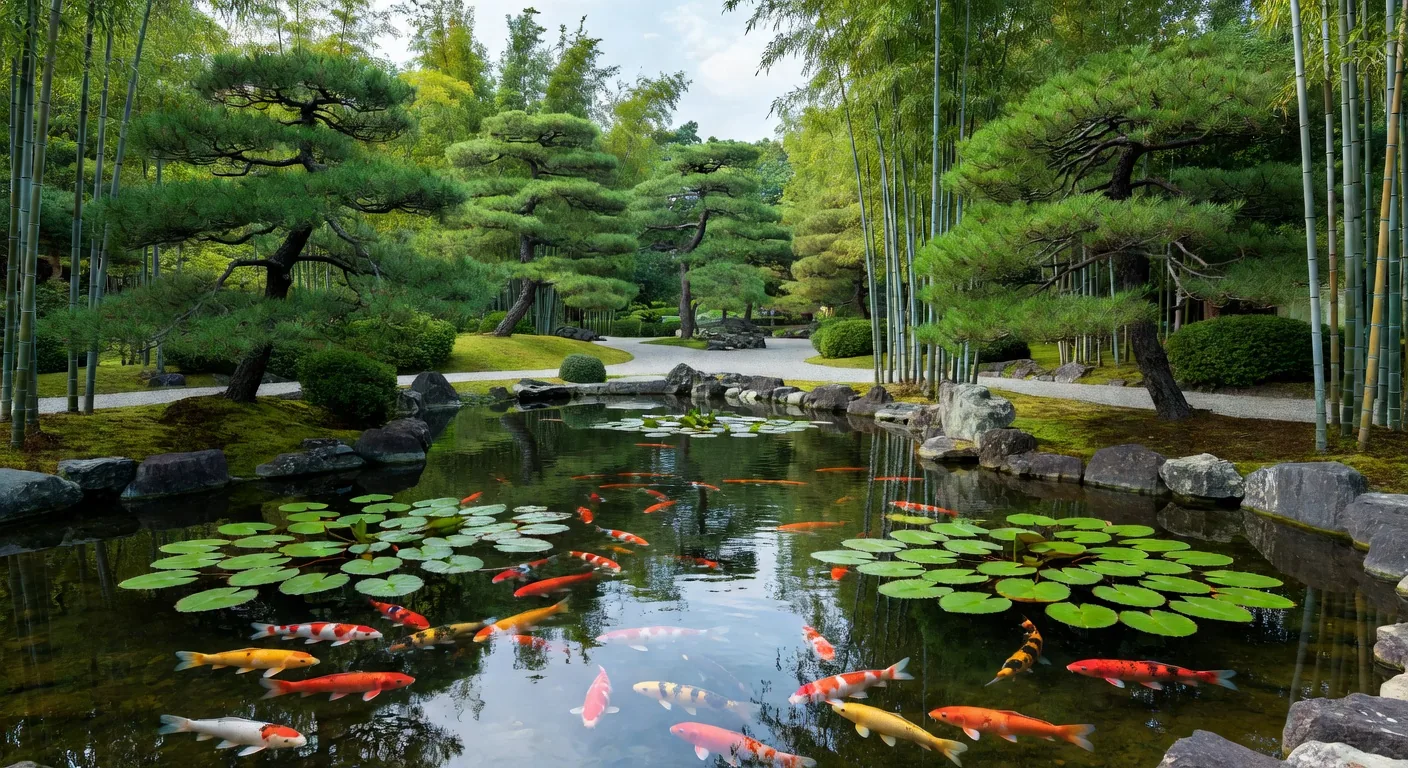
Koi (錦鯉) have been bred in Japan for over two centuries for their extraordinary colour and pattern. In garden ponds, their movement animates still water surfaces, and feeding them is a beloved ritual that connects visitors to the garden's living ecosystem.
Garden Bridges
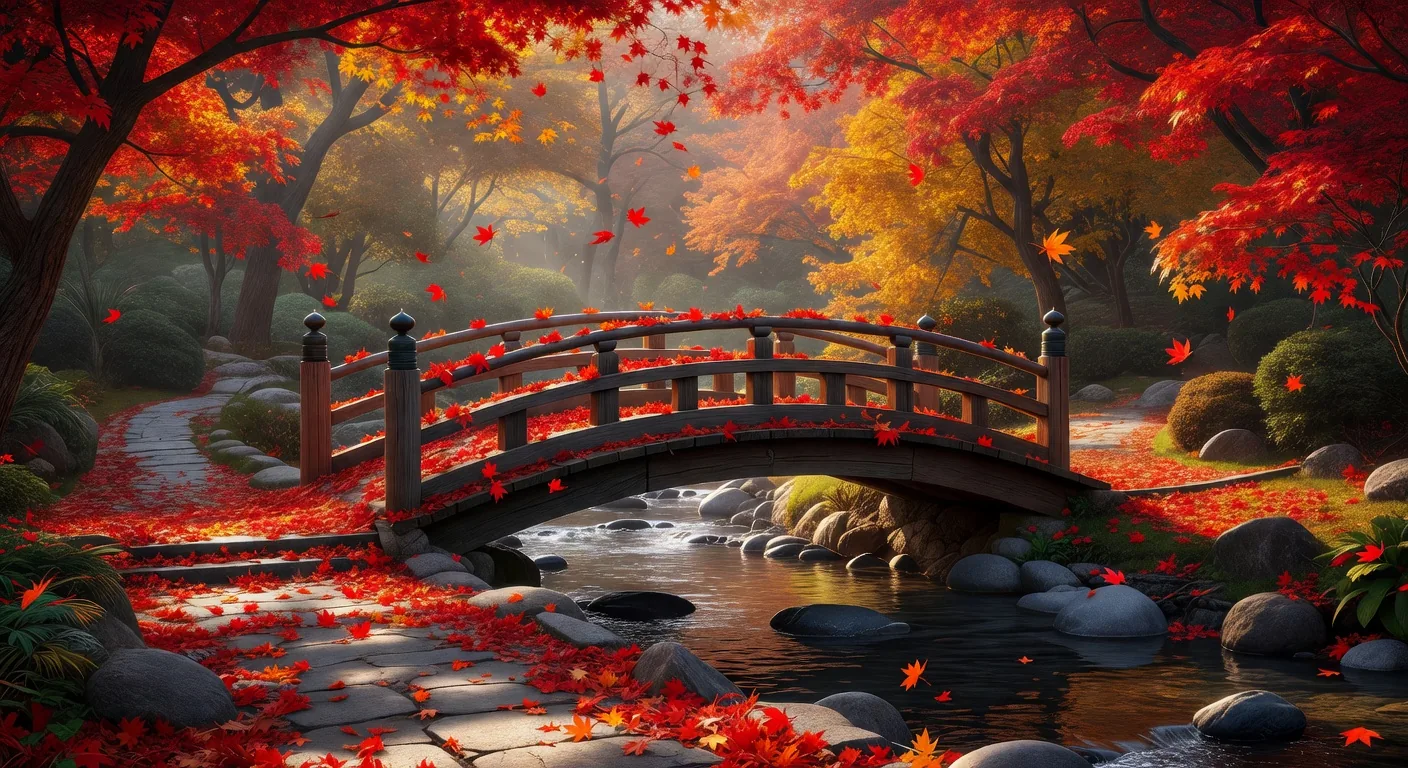
Bridges in Japanese gardens are structural and symbolic — they connect the ordinary world to the island or opposite bank, suggesting a journey or crossing. Stone bridges convey permanence; arched bridges (taiko-bashi) reflect perfectly in still water.
Moss Carpets
Japan's humid climate supports over 1,500 species of moss, and Japanese gardeners have cultivated moss as a ground cover for centuries. Saihoji in Kyoto — the famous Moss Garden — cultivates over 120 species, creating a landscape of extraordinary green quietude.
Bamboo
Bamboo provides sound (the whisper of wind through leaves), sight (graceful vertical lines and dancing shadows), and structure (bamboo fencing). Bamboo groves create natural enclosures that separate garden spaces and evoke the simplicity of rural Japan.
Water Features
Water in Japanese gardens represents the flow of time, the cycle of life, and the mirror of heaven. Shishi-odoshi (deer scarers) — bamboo tubes that fill with water and tip rhythmically — were originally used to frighten deer, but became beloved garden ornaments valued for their meditative sound.
Top 5 Japanese Gardens to Visit
Five gardens that represent the full breadth and depth of the Japanese garden tradition, ranging from the austere to the exuberant.
Ryoan-ji, Kyoto
Japan's most famous and debated garden: fifteen rocks on a bed of white raked gravel enclosed by a low clay wall. The garden has inspired more philosophical interpretation than perhaps any other landscape in the world. Visit at opening time (8am) before tour groups arrive and you may find yourself alone with its silent, perplexing beauty. The temple's additional strolling garden and mirror pond are equally rewarding. Admission: ¥600.
Saihoji (Kokedera), Kyoto
The Moss Temple — so called for its carpet of over 120 moss varieties blanketing the garden floor in every shade of green imaginable — is one of Japan's most otherworldly landscapes. Access requires advance reservation and participation in a sutra-copying ceremony, a requirement that both limits visitor numbers and creates the ideal contemplative mood for the garden that follows. The upper dry garden, rarely visited, is one of the oldest surviving examples of karesansui. Advance reservation required.
Kenroku-en, Kanazawa
One of Japan's three officially designated great landscape gardens, Kenroku-en was developed over two centuries as the private garden of the Kaga domain's Maeda lords. Its name reflects the six attributes of the ideal garden as defined in a Chinese garden treatise. The Kotoji stone lantern standing in the central pond — with its distinctive two-legged design resembling a koto bridge — is perhaps Japan's most photographed garden ornament. Winter yukitsuri (rope supports) add an extraordinary elegance to the snow-season visit. Open year-round; admission ¥320.
Koraku-en, Okayama
Completed in 1700, Koraku-en is unusual among Japanese strolling gardens for its vast open lawns — an aesthetic choice that creates a sense of serene spaciousness quite different from the densely planted gardens of Kyoto. The garden maintains traditional Japanese cranes (tanchozuru) in a dedicated enclosure as homage to the original design, which featured live cranes as garden ornaments. The garden's position directly across the Asahi River from Okayama Castle provides one of Japan's most satisfying borrowed landscape views. Admission: ¥410.
Shinjuku Gyoen Japanese Garden, Tokyo
Within the larger western-influenced Shinjuku Gyoen, the traditional Japanese garden area is a masterclass in intimate garden design. Its carefully framed views across the central pond, stone lanterns half-obscured by pruned azaleas, and teahouse serving matcha to visitors create an island of profound calm within one of the world's largest metropolitan areas. The contrast between the garden's serenity and the skyscrapers visible beyond its tree canopy only heightens the sense of sanctuary. Admission: ¥500.
Etiquette for Traditional Gardens
Traditional Japanese gardens are places of cultural significance and spiritual weight. These guidelines help ensure a respectful visit.
Observe Quiet Hours
Speak softly in traditional gardens, particularly in temple precincts. The designed soundscape — water, wind, birdsong — is as intentional as any visual element.
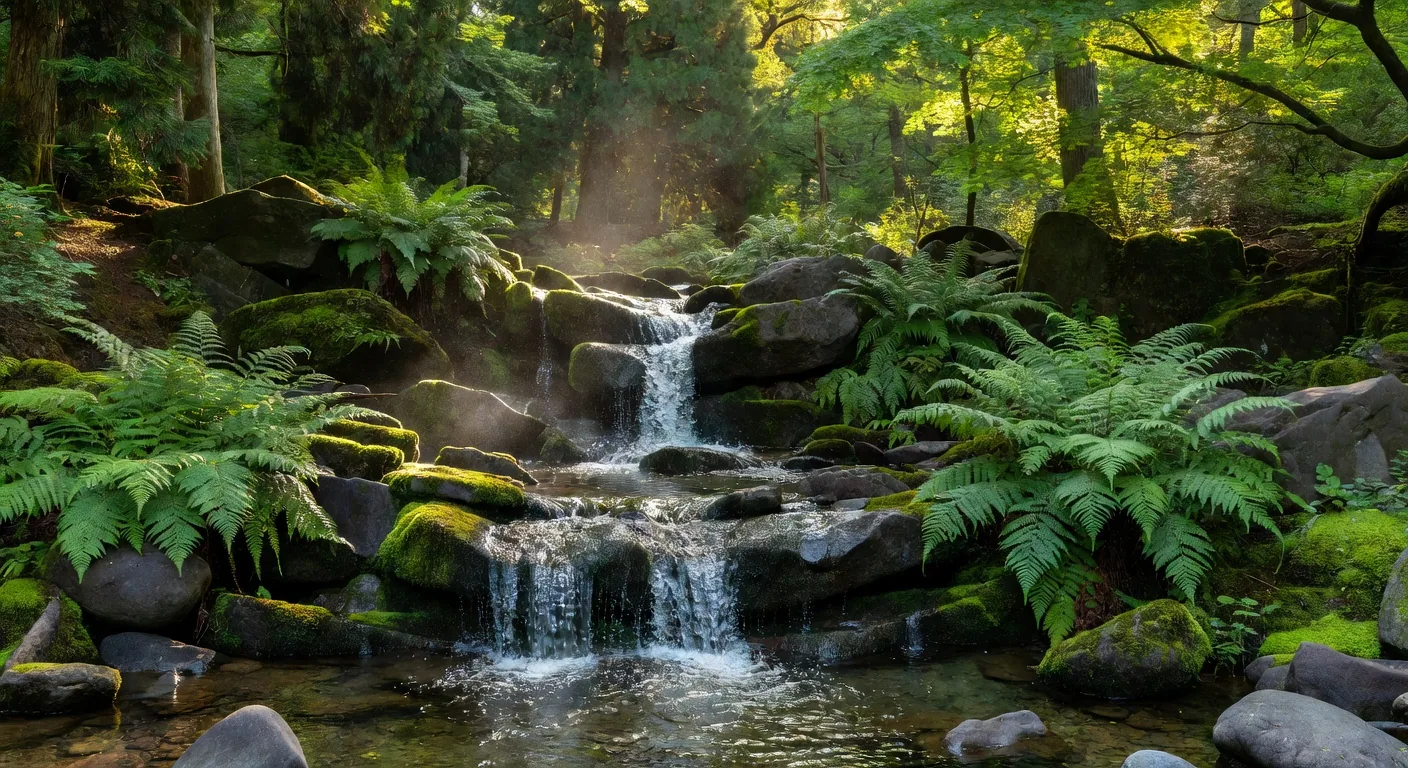
Stay on Designated Paths
Garden moss, in particular, takes decades to establish and is easily damaged. Never step off stone paths onto moss or planted ground, even for a closer photograph.
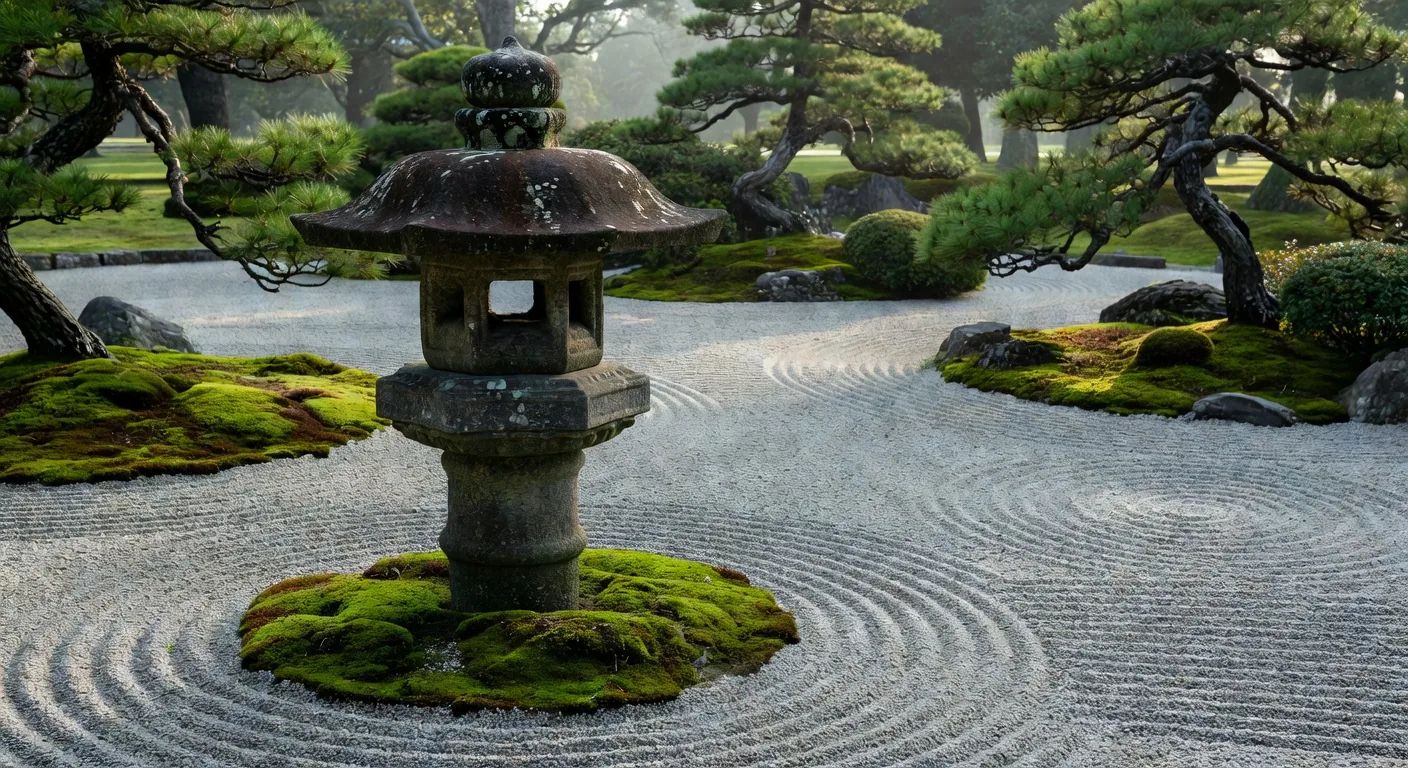
Do Not Touch Rocks or Lanterns
The weathering and patina of garden stones and lanterns represents centuries of aging. Touching, climbing on, or rubbing stones damages both the object and its aesthetic context.
Observe Koi Feeding Rules
Some gardens permit koi feeding with purchased food. Do not feed koi unauthorized food, as human food can cause illness and upset the pond's carefully maintained ecological balance.
Visit at Opening Time
Major traditional gardens become very crowded by mid-morning, particularly during cherry blossom and autumn foliage season. Arriving at opening time offers a profoundly different, intimate experience.
Limit Screen Time
While photography is generally permitted, consider spending time simply looking at the garden with your eyes rather than through a lens. The designed experience rewards undivided attention and contemplative presence.
Seasonal Changes in Japanese Gardens
Japanese gardens are designed to provide distinct beauty in every season. No season is less rewarding than another — each reveals different aspects of the garden's character.
Spring
Cherry blossoms, plum (ume), wisteria, and azaleas transform gardens with explosions of pink, white, and purple. The season also brings fresh green growth to bamboo groves and deciduous trees, creating a vibrant backdrop for flowering plants.
Summer
Gardens deepen to rich, lustrous greens. Lotus flowers bloom in ponds; iris gardens reach their peak in June. The sound of water features becomes more prominent as the heat encourages visitors to linger near streams and falls.
Autumn
Koyo — autumn leaf viewing — is arguably the finest season to visit Japanese gardens. The contrast of crimson and golden maples against dark pine, ancient stone, and still water creates compositions of extraordinary painterly beauty.
Winter
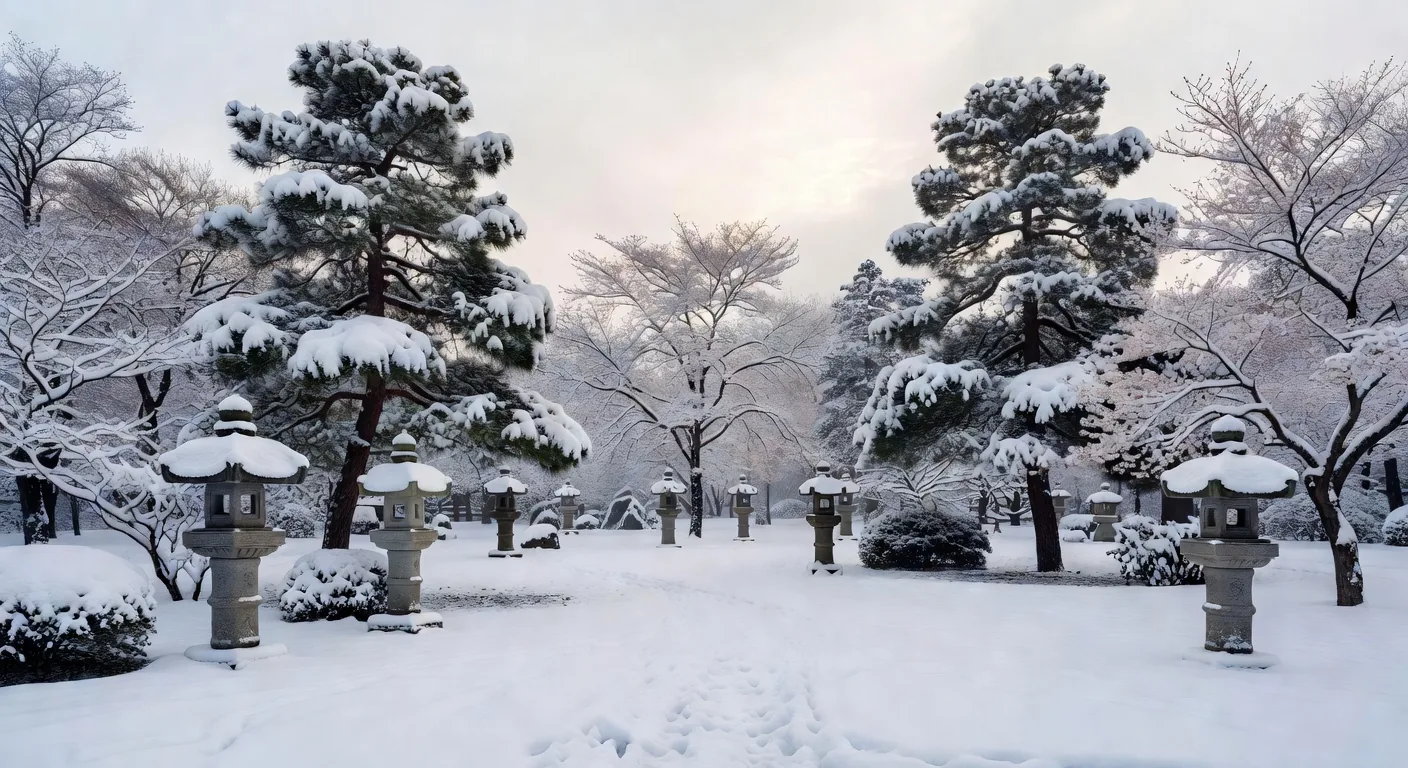
Snow transforms gardens with a white blanket that reveals their essential structure with clarity unavailable in other seasons. Plum blossoms (ume) appear as early as February, their fragile pink flowers on bare branches evoking the classic Japanese aesthetic of beauty in solitude.